February 12, 2026
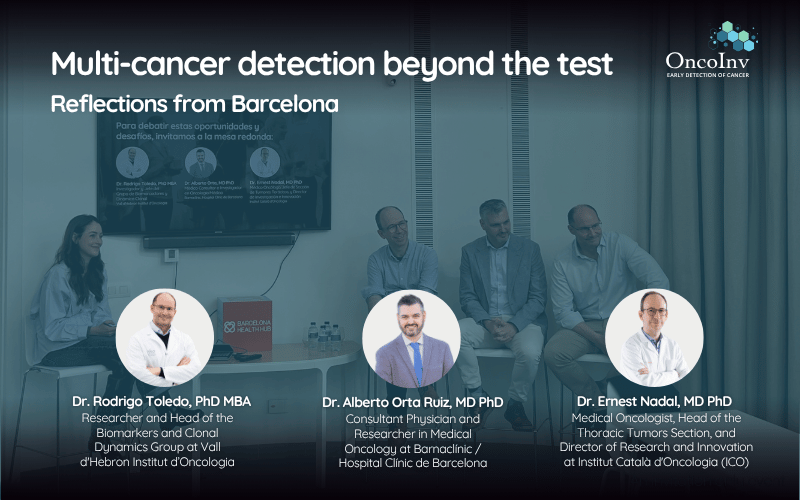
OncoInv recently hosted an expert roundtable at Madrid Health Hub, bringing together clinicians, laboratory leaders and researchers to discuss the evolving role of multi-cancer detection (MCD) tests in oncology care.
The discussion focused on how MCD testing can be responsibly integrated into clinical practice. Participants emphasized that clinical value depends strongly on appropriate patient selection, as predictive value is closely linked to cancer prevalence in the tested population. Indiscriminate use in low-risk groups may reduce clinical utility and increase false positives, while targeted use in well-defined risk populations has the potential to enhance impact.
Experts acknowledged that while technical performance data are increasingly available, robust evidence regarding impact on meaningful clinical outcomes is still evolving. While mortality remains a key metric in cancer screening, additional outcomes such as stage shift, quality of life, healthcare system impact and cost-effectiveness were highlighted as relevant considerations. Participants noted that in screening contexts, cost-effectiveness remains closely tied to mortality outcomes, underscoring the importance of long-term evidence generation.
A key tension was identified between generating sufficient evidence to demonstrate impact on major outcomes and acting on existing data indicating clinical potential. Delaying adoption may limit patient access, whereas premature implementation could introduce clinical, ethical and economic risks.
Implementation was highlighted as a critical factor. MCD tests must be embedded within structured clinical pathways, including clear follow-up protocols, access to confirmatory diagnostics and coordinated care processes. Ethical communication and realistic expectation management were described as essential to responsible adoption.
The roundtable concluded that successful integration of MCD testing into routine care will depend on continued evidence generation, system readiness and sustained dialogue among stakeholders.